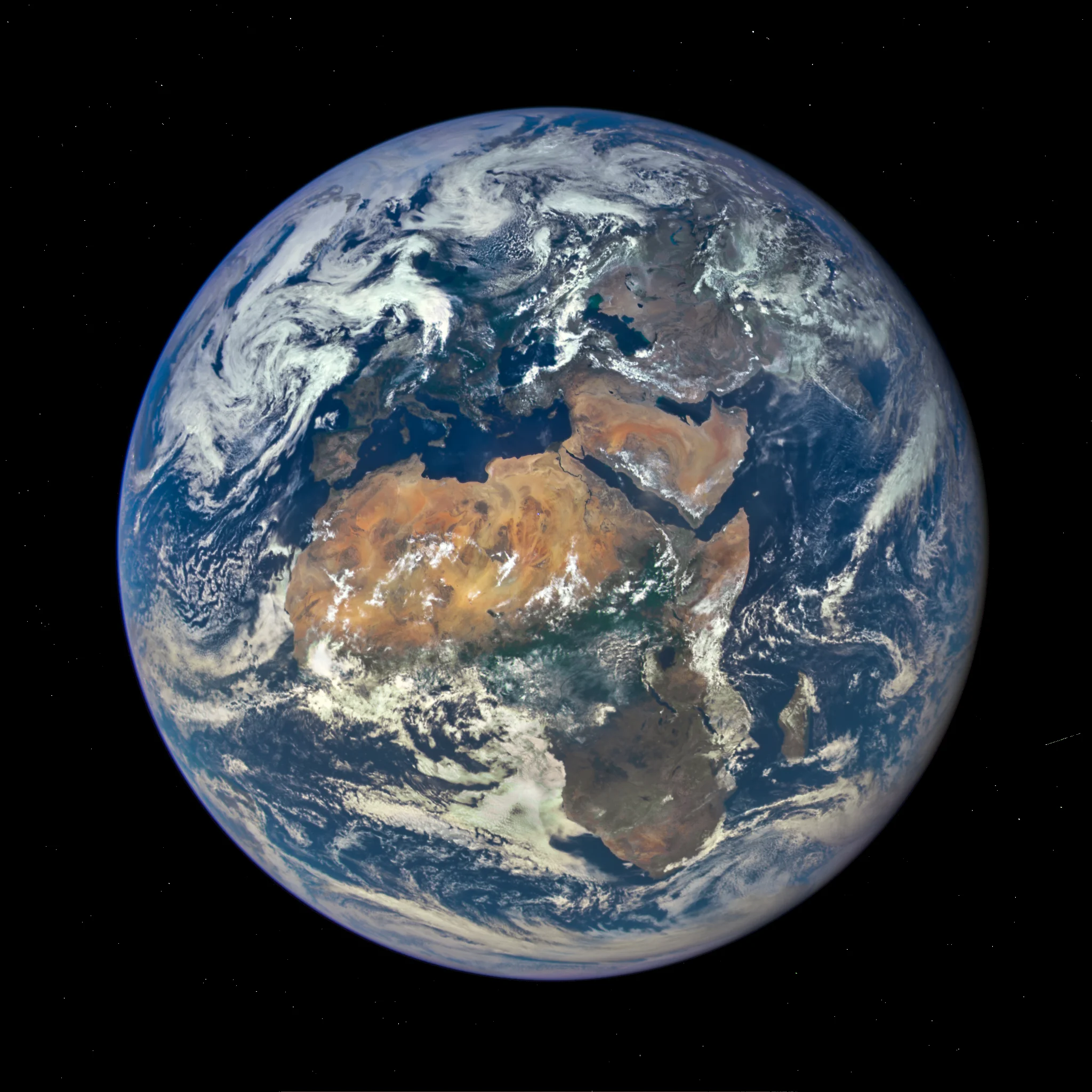

Image Credit: NASA via Wikimedia Commons - HDR tune by Universal-Sci

What is the reason that agriculture yields less in African countries than in other places? Henk Breman (former Wageningen University & Research (WUR)), Tom Schut (WUR), and No'am Seligman have been researching agricultural development since 1960 in 54 different African countries. In addition, they looked at the possibilities to accelerate that development. Their findings can be found in the book "From fed by the world to food security. Accelerating agricultural development in Africa".
Yield growth
For their book, the researchers grouped 49 of the 54 African countries into six classes, based on the rate of increase in yield on agricultural land since 1960. The most favorable class has a growth that is equal to the world average, while the worst class has even lower yields than back in 1960. When looking at the class with the least growth in comparison to the class with the highest growth, reduced use of fertilizer is seen as well as a reduction in food insecurity.
The researchers also analyzed the agricultural and socio-economic differences of the classes. This analysis shows no evident influence between agricultural development and soil and climate. Moreover, there are regions where arable farming can make use of modern means of production in all African countries.
Socio-economic factors
The countries in these six classes do have apparent differences in the socio-economic field. High population density, favorable transport facilities, income per capita, pricing policy, and CO2 emissions were positively correlated with agricultural development. Negatively correlated are, for example, instability and corruption, significant differences in the position of men and women, and the economic dominance of agriculture.
Sources and further reading: Wageningen University & Research press release
If you enjoy our selection of content please consider following Universal-Sci on social media:
These are the world’s five deadliest volcanoes … and why they’re so dangerous

Scientists working in one of Earth's most extreme habitats, Antarctica, have made some surprising discoveries.

Our cherished banana is in trouble, but scientists are on the case to find its saving grace. A new scientific expedition uncovered wild species with features that might safeguard its future.
The so-called diabolical ironclad beetle, formally known as Nosoderma Diabolicum, is an incredible little critter that can withstand loads thousands of times larger than its body weight. Scientists are looking into mimicking this feat in new materials.
Viruses challenge our concept of what 'alive' even means

As human society evolves it seems that we are separating ourselves from nature more and more. Some might ask whether we still a component of nature. Others might go a step further by asking: do we even still need nature at all? Oxford biologist Manual Berdoy explains his views on theis topic
Why is it that broad-leaved trees change color in the autumn but evergreens stay green throughout the entire year? Professor Barry Logan explains

A team of scientists reviewed the merits of fungi-derived leather substitutes, and the results are promising.

The crystalline material makes it possible to store energy for several months, making it ideal for storing excess solar energy in the summer to be used in darker months.

Flowing rivers are probably not the first thing that comes to mind when thinking of Greenland and its seemingly endless amount of frozen vistas. Nonetheless, scientists uncovered that there might be a substantially large one underneath the surface, flowing from deep in its interior all the way to the northeastern coast.

Nuclear waste is something that speaks to the imagination of many and there are a lot of persistent myths and misconceptions. Here are four things you didn’t know about nuclear waste

In recent years, UV filters components derived from sunscreen have been detected more frequently in coastal waters. These UV filters seem to weaken coral, causing the warmed seawater to damage the coral further.

Small forest fragments are more important than previously expected. In comparison to larger forests, they store more carbon in the soil, contain better food sources for wild animals, and house fewer ticks.

Regular solar cells have a hypothetical limit of 33% for power conversion efficiency while scientists think an efficiency of 66% could be reached using perovskite solar cells
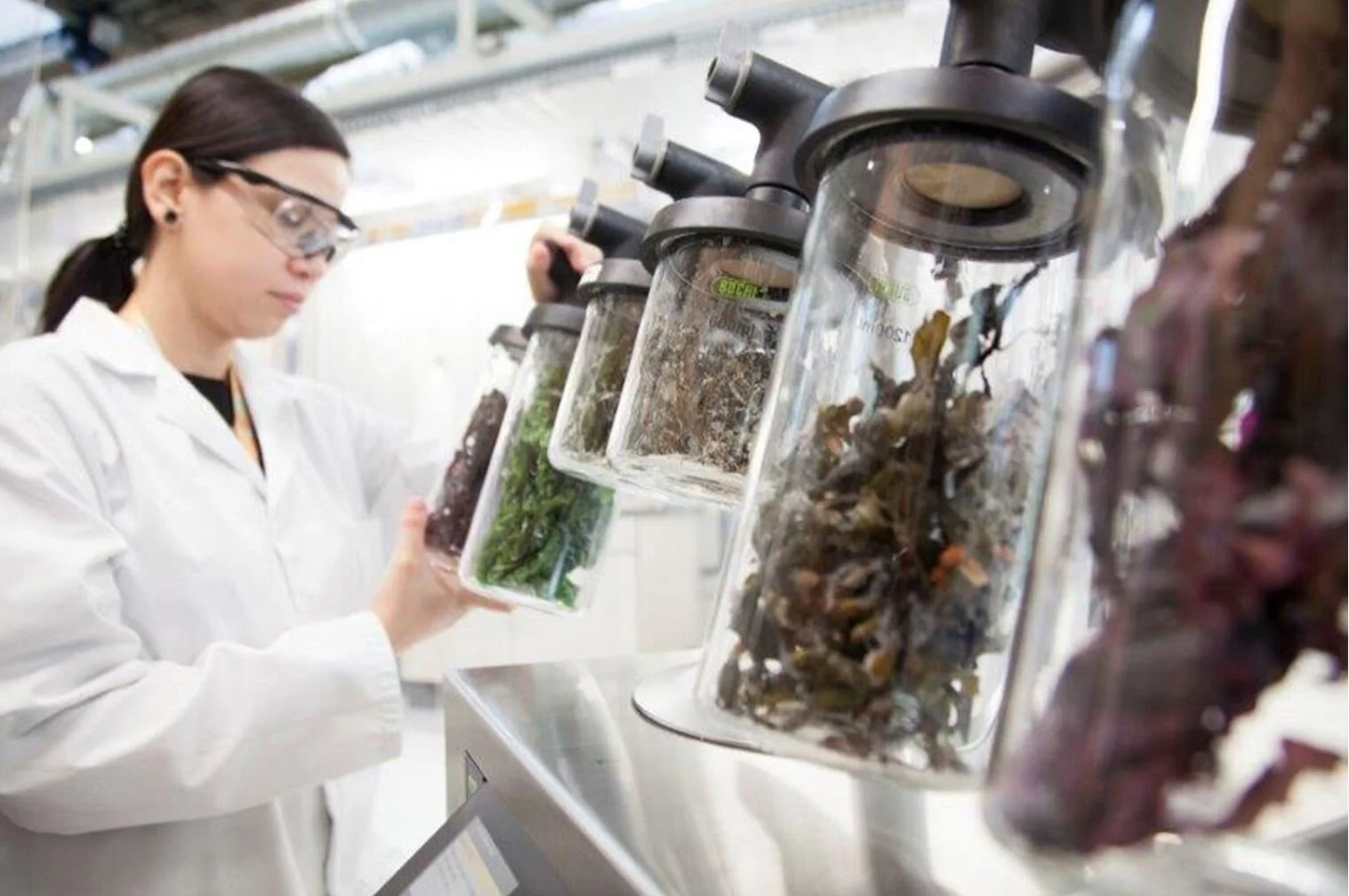
The European MacroFuels project has succeeded in making usable seaweed fuel.
With an estimated lifespan of 400 years, the Greenland shark has just been reported to be the longest-lived vertebrate on the planet. This is only the latest of a series of recent findings that push the boundaries of animal longevity, and it raises the perennial question of what factors enable some animals to achieve what we might call extreme longevity – lifespans that can be measured in centuries.