
We’ve all experienced that post-workout mental clarity - that feeling of being a bit "sharper" after hitting the gym or going for a run. But what is actually happening inside our heads to cause that?
A new study from the University of Iowa gives us an unprecedented look into the brain right after physical activity, and the findings might just change how you view a quick sweat session.
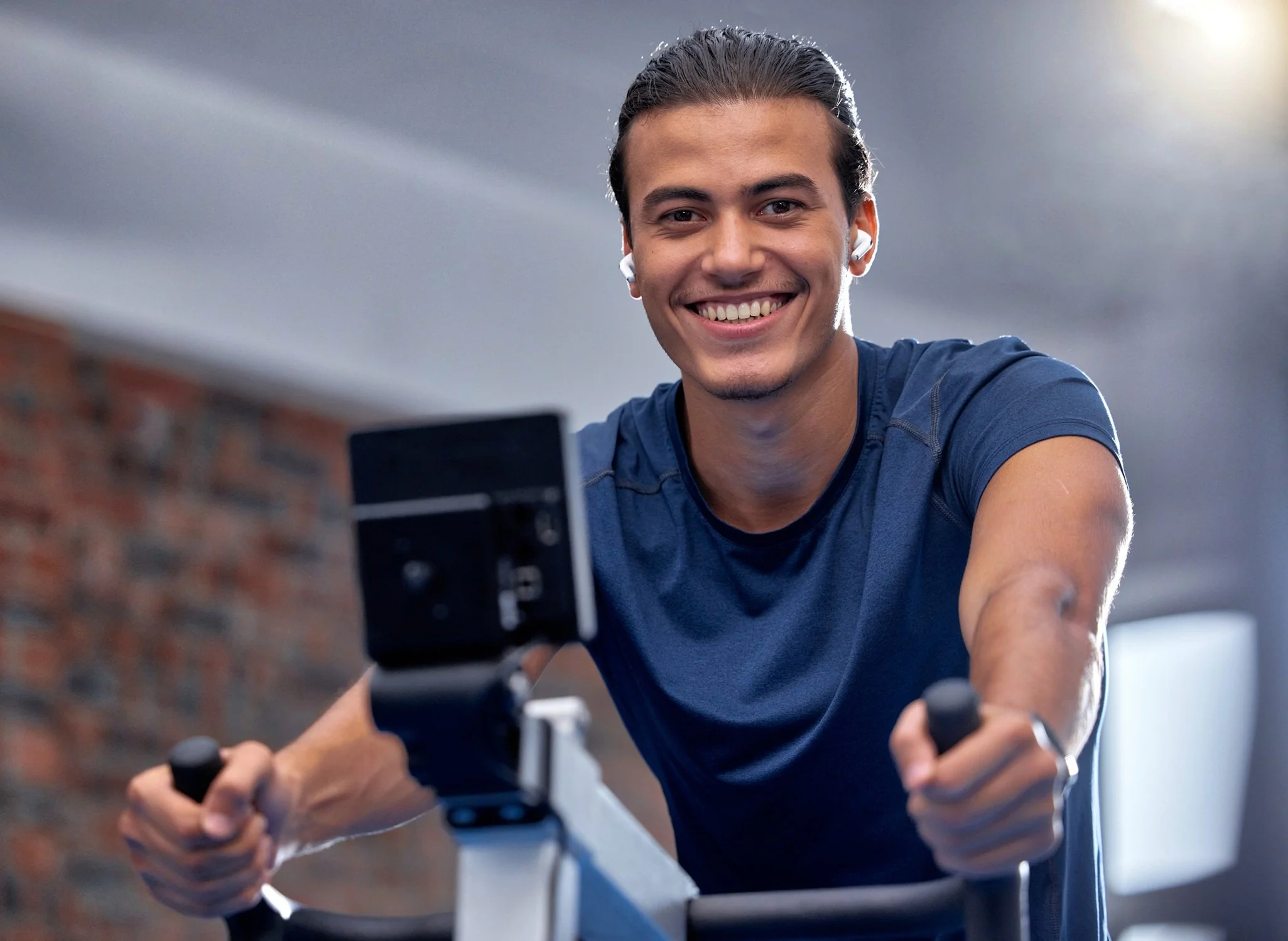
Image Credit: PeopleImages via Shutterstock / HDR tune by Universal-Sci
What a 20-Minute Ride Does to Your Brain
To figure this out, researchers worked with 14 epilepsy patients at the University of Iowa Health Care Medical Center. Because these patients already had electrodes implanted for their treatments, the research team had a rare opportunity to measure human brain activity directly.
The participants, aged 17 to 50, did a short warm-up and then cycled on a stationary bike for 20 minutes at a pace they could maintain for the entire session. During this time, the researchers recorded their brain activity using intracranial electroencephalography, or iEEG.
After the cycling session, the researchers observed an increase in high-frequency brain waves known as ripples. These ripples started in the hippocampus, a region closely tied to memory, and spread to areas of the cortex involved in learning and recall.
Put simply, the findings suggest that even a single session of exercise may temporarily boost communication in brain networks that support forming and retrieving memories
Interesting article: Exercising during the afternoon has extra benefits - Here's why - (Universal-Sci)
Why This is a Big Deal
Scientists have spotted these memory-boosting ripples in animals like mice before, but proving it happens in humans is notoriously tricky. You can't exactly implant electrodes into healthy volunteers just to see what happens when they jog.
Because of that hurdle, past human studies had to rely on indirect clues, like changes in blood flow or oxygen levels after a workout. Those clues hinted that exercise helps brain function, but they couldn't catch the neurons actually firing in real time.
This new study changes the game by offering a direct, front-row seat to the action. According to Michelle Voss, the study's lead author and a professor at the University of Iowa, the data proves that just one exercise session can rapidly alter the brain rhythms tied to cognitive function.
And if you're wondering if this only applies to the specific patients in the study, researchers don't think so. Voss notes that the post-workout brain activity they recorded closely mirrors what we see in non-invasive brain scans of healthy adults, suggesting this is a universal human response to breaking a sweat.
What could this mean for everyday health?
The study does not prove that one 20-minute bike ride will immediately improve a person’s test scores or fix memory problems. It also involved a small group of participants, all of whom had epilepsy, so more research is needed.
Still, the findings add to a growing body of evidence that exercise supports brain health, not just physical health. They also raise a practical question: if the brain responds this quickly, could timing exercise before studying, learning a new skill, or doing mentally demanding work make a difference?
The researchers want to explore that next. They plan to seek funding for future studies that would combine direct brain recordings with memory testing after exercise. That could help clarify whether the ripple activity seen in the brain translates into measurable improvements in learning and recall.
If you are intersted in more details about the underlying research be sure to check out the study published in the peer reviewed science journal: Brain Communications, listed below this article.
Sources, further reading and more interesting articles:
Exercise enhances hippocampal-cortical ripple interactions in the human brain - (Brain Communications)
Exercising during the afternoon has extra benefits - Here's why - (Universal-Sci)
Health Check: how to start exercising if you’re out of shape - (Universal-Sci)
What is the best exercise for losing weight? - (Universal-Sci)
Too busy to follow science news during the week? - Consider subscribing to our (free) newsletter - (Universal-Sci Weekly) - and get the 5 most interesting science articles of the week in your inbox
FEATURED ARTICLES:





Scientists discovered that the devastating bubonic plague pandemic shaped human evolution and is still affecting our health 700 years later.