
Beneath the ice of Saturn’s moon Enceladus lies an ocean that seems an unlikely home for life. Its water is highly alkaline, and one ingredient microbes need is extremely scarce. Yet a laboratory experiment suggests that the chemistry of this hidden ocean could help certain microorganisms keep growing.
The research does not show that Enceladus is inhabited. It does offer a clearer picture of how life might survive there, and gives scientists another reason to investigate.
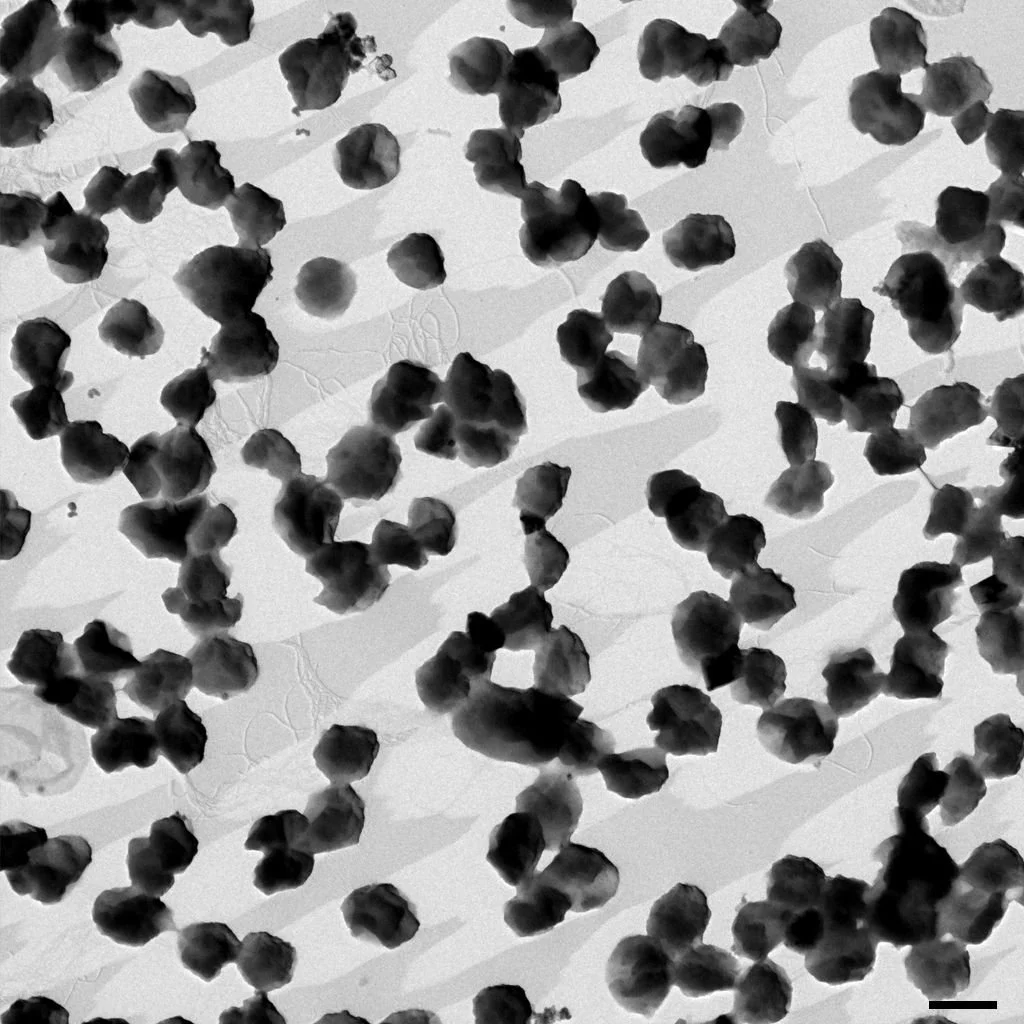
The microorganism Methanothermococcus okinawensis has been studied for its ability to survive on Enceladus, one of Saturn’s moons. - Image Credit: Chiara Morawetz & Reinhard Rachel (University of Regensburg)
What makes this hidden ocean worth exploring?
Clues to the ocean’s chemistry come from the water-rich plumes that regularly shoot out through the moon’s ice. NASA’s Cassini mission detected hydrogen, methane and dissolved minerals in these plumes. According to the researchers, those findings provide strong evidence of reactions between water and rock, along with hydrothermal activity on the ocean floor.
That matters because such reactions could provide an energy source for microbes. Some microorganisms on Earth already live near deep-sea hydrothermal vents, using hydrogen and carbon dioxide to obtain energy and producing methane in the process.
A team supervised by William Orsi, professor of geomicrobiology at Ludwig-Maximilians-Universität München, wanted to test whether one of these organisms could cope with conditions thought to exist on Enceladus. Their study, published in Science Advances, brought together expertise in microbes, chemistry and planetary science.
The question was not simply whether the moon has liquid water. It was whether its particular mix of water, minerals and rock could support a living organism.
Could an Earth microbe grow in a version of that ocean?
The researchers chose Methanothermococcus okinawensis, a microorganism belonging to a group called archaea. It normally lives near hydrothermal vents deep in Earth’s oceans. According to the release, the way it obtains energy from hydrogen and carbon dioxide is considered one of the oldest forms of metabolism still used by life on Earth.
To test it, the team recreated key features of the moon’s presumed seafloor environment. They used a special chamber with an oxygen concentration roughly 10,000 times lower than that of Earth’s atmosphere, along with carbonate salts to reproduce the very salty, alkaline water and a simulation of the rocky ocean floor.
The comparison revealed something that a conventional laboratory mixture had missed. In that standard mixture, the organism failed to grow at pH 10 or 11, both strongly alkaline conditions. In the Enceladus simulation, however, it continued growing and producing methane, using hydrogen released by reactions between water and rock.
The result suggests that alkalinity alone does not tell the whole story. According to the team, the surrounding chemistry can make conditions more supportive of microbial life than previously thought.
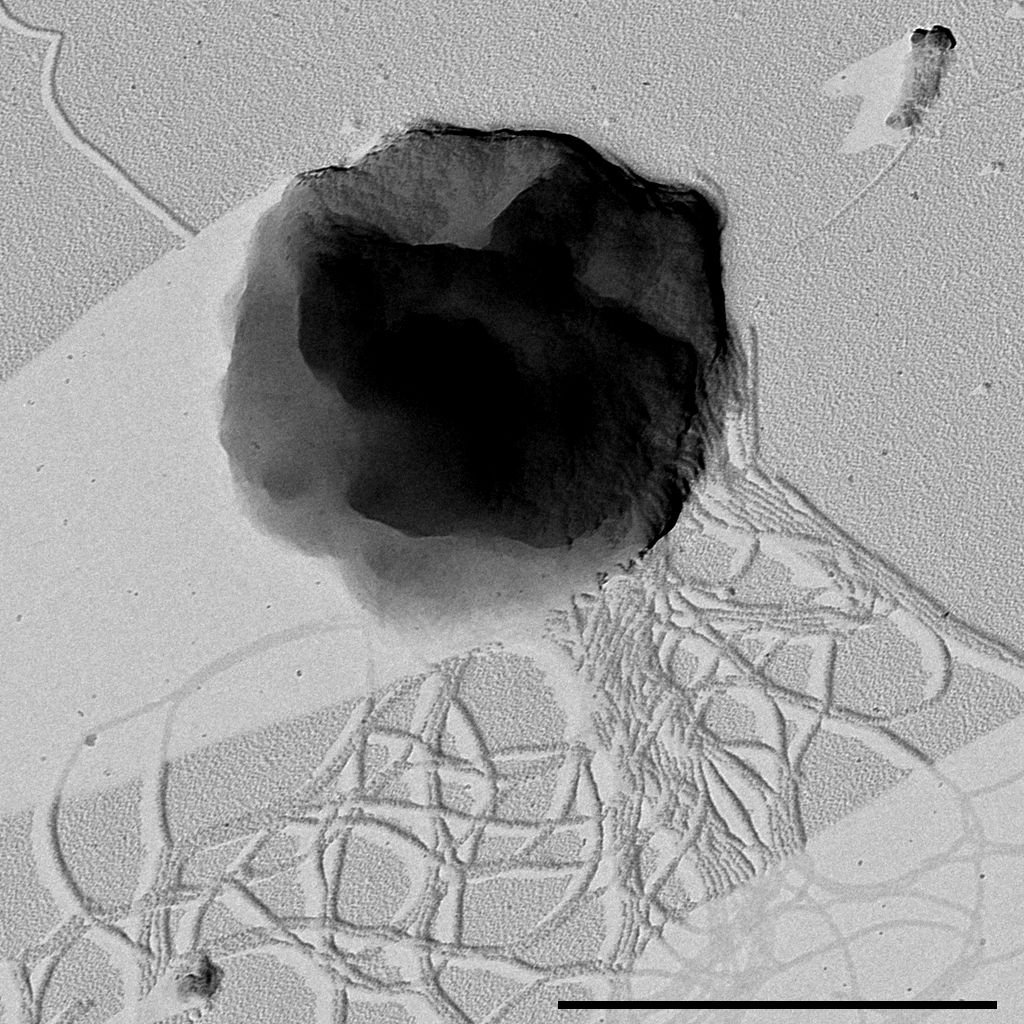
A different view of the microorganism *Methanothermococcus okinawensis*, which researchers have studied to assess whether it could survive on Saturn’s moon Enceladus. - Image Credit: Chiara Morawetz & Reinhard Rachel (University of Regensburg
How could life cope when carbon is scarce?
Hydrogen supplies only part of what this microbe needs. It also requires carbon dioxide, which is extremely scarce under the highly alkaline conditions expected in Enceladus’ ocean.
The experiments showed that the organism could adjust and collect the tiny amounts of carbon dioxide available, allowing it to keep growing. According to Orsi, interactions between rock and water do more than produce hydrogen for energy: they also create conditions that allow microbes to keep accessing carbon despite the shortage of carbon dioxide.
This expands the range of conditions scientists consider potentially suitable for life on Enceladus. It also strengthens the case, the researchers say, for future missions to collect samples from the plumes carrying material out of its hidden ocean.
The main distinction remains essential: supporting life and containing life are different things. These experiments suggest that Enceladus’ chemistry could help certain microbes survive. Whether anything actually lives beneath its ice is still an open question.
Sources and further reading:
Scientists find that earth bacteria could thrive on Enceladus! - (Universal-Sci)
Mysterious levels of methane on Enceladus not explainable with known geochemical processes - (Universal-Sci)
Study Shows Potential to Trace Alien Life in Emitted Ice Grains from Distant Moons - (Universal-Sci)
The internal ocean of Saturn’s moon Enceladus could be old enough to have evolved life, finds study - (Universal-Sci)
Could there be alien life right beneath the surface of icy worlds like Enceladus and Europa? - (Universal-Sci)

Too busy to follow science news during the week? - Consider subscribing to our (free) newsletter - (Universal-Sci Weekly) - and get the 5 most interesting science articles of the week in your inbox
FEATURED ARTICLES:



Scientists may have found an explanation for one of the biggest mysteries about ʻOumuamua that baffled astronomers in 2017.