
Could a short sentence recorded on a smartphone contain clues about Type 2 diabetes? Researchers at Klick Labs are exploring that possibility by turning voice recordings into images, then using an artificial intelligence model to look for patterns.
Their new study found combinations of sound patterns associated with the condition. The findings expand what researchers can examine in a voice, although they don’t show that this approach is more accurate than the team’s earlier work.
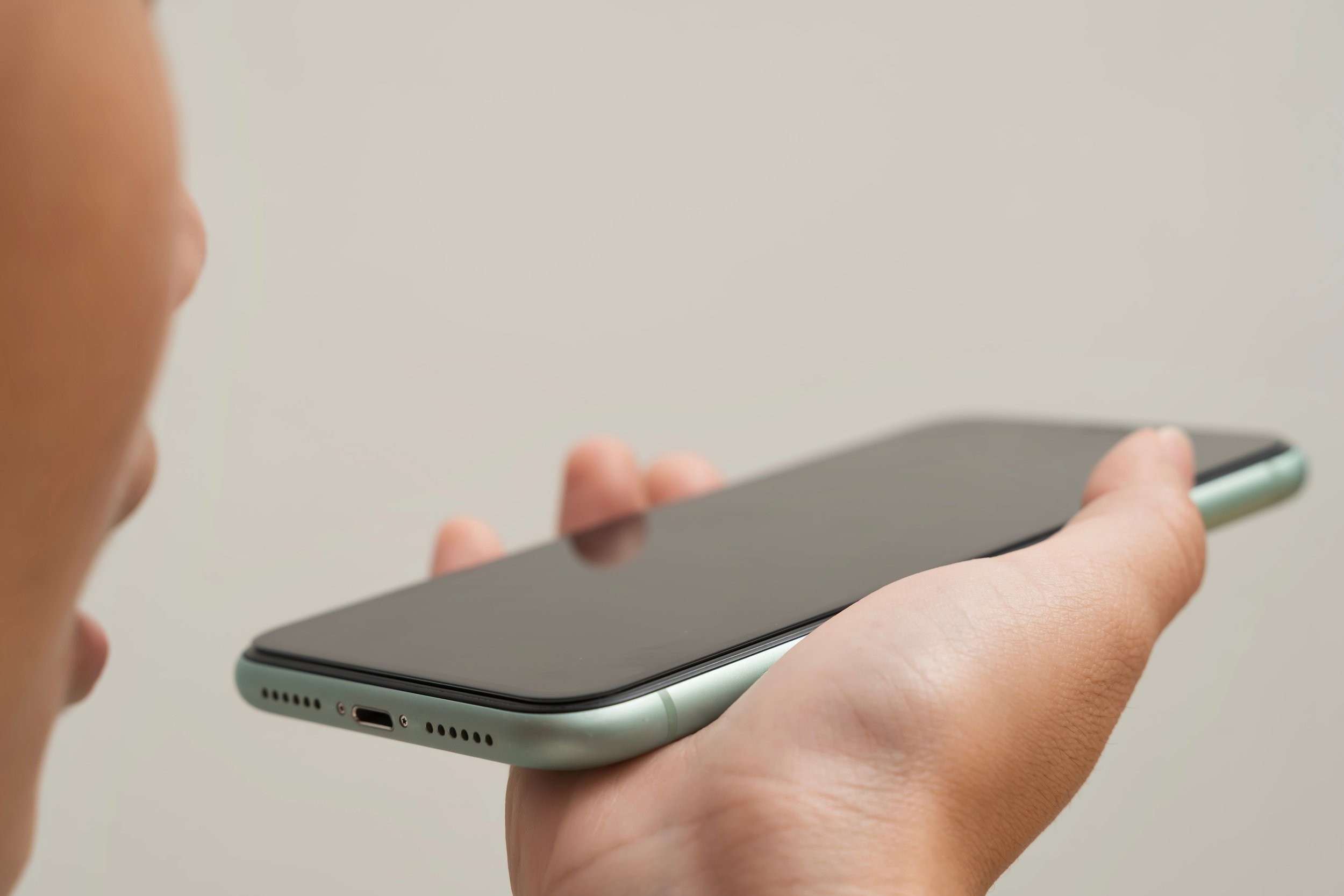
Image Credit: jittawit21 via Shutterstock / HDR tune by Universal-Sci
What can a picture of a voice reveal?
According to the release, the study analyzed 14,759 recordings from 461 adults speaking randomly selected short English sentences. The research was published in the IEEE Journal of Biomedical and Health Informatics.
Each recording was converted into a spectrogram, a visual map showing sound frequencies over time. An AI model called an Audio Spectrogram Transformer then analyzed these maps.
This gave the researchers a different way to investigate the recordings. Instead of relying primarily on a list of voice features chosen beforehand, the model could learn complex combinations of sound patterns directly from the recordings.
“Now, we can literally see many more clues related to diabetes within vocal biomarkers,” said Yan Fossat, principal investigator of the study and Senior Vice President, Digital Health R&D at Klick Applied Sciences.
Vocal biomarkers are measurable characteristics of a voice associated with health. According to Fossat, examining relationships across frequencies and time allowed the team to find combinations of patterns beyond the predefined features used in its earlier analysis.
How well did the model spot the patterns?
The researchers used separate models for women and men. Within those groups, the predictions relied on voice recordings, without adding age, body mass index or other basic health information as inputs.
The models achieved a balanced accuracy of 71.3 percent for women and 72.4 percent for men.
Balanced accuracy gives equal weight to two tasks: correctly identifying people who have Type 2 diabetes and correctly identifying those who don’t. It averages the model’s performance on those tasks, so both groups count equally in the final score.
The results show that the recordings contained patterns the models could use to help distinguish between people with and without the condition. They also leave room for errors. The research concerns associations between voice patterns and Type 2 diabetes; the release does not establish that a smartphone recording can provide a diagnosis.

Why don’t the earlier, higher scores tell the whole story?
Klick Labs’ 2023 study reported accuracy figures of 89 percent for women and 86 percent for men. Those numbers may look stronger, but the release explicitly cautions against comparing them directly with the new results.
The earlier research used recordings of a fixed sentence alongside age, body mass index and other basic health information. It identified 14 predefined acoustic features associated with Type 2 diabetes, including pitch and intensity.
It also reported conventional accuracy: the percentage of all predictions that were correct. The new study used balanced accuracy, as well as different inputs, methods, validation approaches and datasets. The figures therefore don’t establish that either approach performs better than the other.
The advance described in the new study is a broader way of searching for clues in speech. By turning sound into visual maps, the researchers could examine complex patterns without limiting the analysis primarily to features selected in advance.
The main takeaway is that voice recordings may contain more information associated with Type 2 diabetes than earlier methods captured. This study expands the search for those signals, while leaving their potential use in diagnosis unresolved.
If you are interested in more details about the underlying research, be sure to check out the article published in IEEE Journal of Biomedical and Health Informatics listed below.
Sources and further reading in Health, Mind & Brain:
V2D: Detection of type 2 diabetes using only smartphone voice recordings via spectro-temporal transformer embeddings - (IEEE Journal of Biomedical and Health Informatics)
Can a persons' voice really reveal something about their personality? - (Universal-Sci)
Your Tears Could Be Hiding Clues About Your Brain Health - (Universal-Sci)
Vitamin D might help prevent diabetes, but it does not work for everyone - (Universal-Sci)
Can AI Clarify Medical Results, Reducing Patient Anxiety and Doctor Workload? - (Universal-Sci)

Too busy to follow science news during the week? - Consider subscribing to our (free) newsletter - (Universal-Sci Weekly) - and get the 5 most interesting science articles of the week in your inbox
FEATURED ARTICLES:





Scientists may have found an explanation for one of the biggest mysteries about ʻOumuamua that baffled astronomers in 2017.