
A greener street or residential courtyard may matter for more than the view. A study following nearly 3,000 older adults for 16 years found that people with more greenery near their homes had a lower risk of developing dementia. The strongest link appeared within just 100 metres of where they lived.
The finding puts a familiar part of city life in focus: the vegetation people encounter close to their front doors.
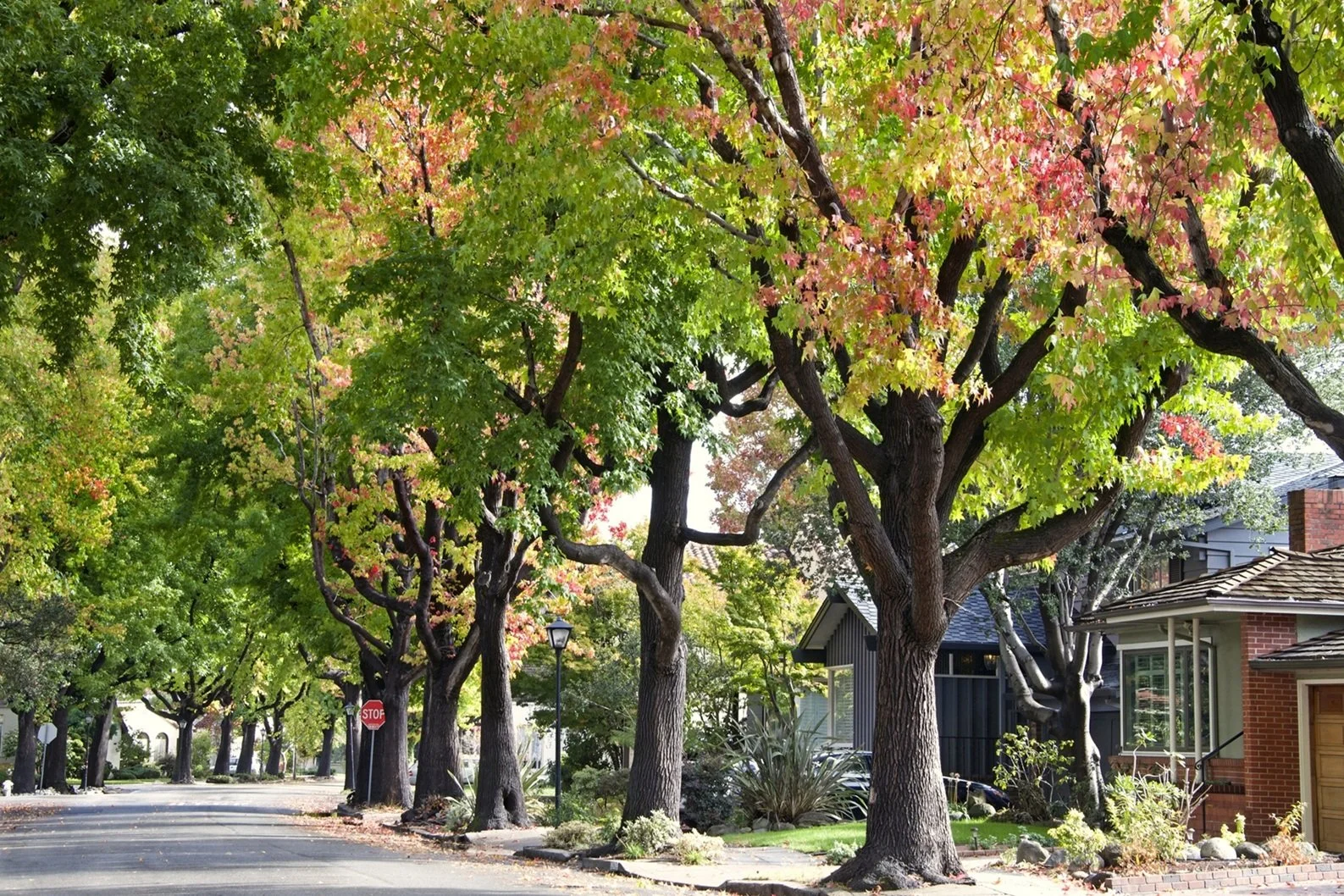
Image Credit: Sheila Fitzgerald via Shutterstock - HDR tune by Universal-Sci
How much could the nearest greenery matter?
Researchers from Stockholm University and Karolinska Institute tracked 2,993 people aged 60 or older in Stockholm. Over the study’s 16-year follow-up, 477 participants developed dementia.
Using satellite images and geographic mapping tools, the team measured vegetation within 100, 250 and 500 metres of participants’ homes each year. Repeated assessments allowed them to follow participants’ cognitive health and identify cases of dementia over time.
More greenery in the immediate residential surroundings was associated with a 20 per cent lower risk of developing dementia. The association was strongest within 100 metres of home and weaker farther away. It was also more pronounced among women.
The researchers took into account factors including age, education, socioeconomic circumstances, lifestyle, air pollution, traffic noise and proximity to water. Still, the finding shows an association: it does not establish that greenery itself prevented dementia.
Published in Alzheimer’s & Dementia, the study adds evidence that the surroundings closest to home deserve attention when considering brain health in later life.
What might connect greener surroundings with brain health?
The release points to several possible connections, drawing on previous and ongoing research. These are potential explanations, rather than proof of why the dementia association appeared.
According to the researchers, natural environments can help people recover mentally, reduce stress and support well-being. Their other studies have linked more greenery near home with better sleep, better mental health, greater life satisfaction and lower use of prescribed antidepressants.
Green spaces can also encourage people to spend time outdoors, be physically active and connect with others. Meanwhile, vegetation can help reduce environmental pressures such as traffic noise, air pollution and heat.
Together, these possibilities suggest several ways that greener surroundings could support health across a person’s life. The study’s focus on the area nearest home also raises a practical consideration: everyday surroundings may become especially important when people spend more time at home.
What could this mean for the places we live?
The findings support preserving and adding greenery throughout residential areas. That can include trees, gardens, green courtyards and vegetation along streets and walking routes, as well as parks. According to the release, these spaces offer benefits even where access to larger natural areas is limited.
For Cecilia Stenfors, the study’s first author and an associate professor of psychology at Stockholm University, brain health belongs in decisions about how cities develop.
“Brain health needs to be considered when we plan and develop our cities and residential environments.”
Stenfors also emphasises that protecting existing vegetation and creating new green spaces should go together. Those spaces need to be accessible and usable for people with different needs and abilities.
The main takeaway is that greenery close to home deserves attention as part of healthy urban living. This study does not prove that a greener neighbourhood prevents dementia, but it suggests that planning for healthy ageing should include the everyday environment just outside the front door.
If you are interested in more details about the underlying research, be sure to check out the article published in Alzheimer & Dementia, listed below this article.
Sources and further reading:
Precision residential greenspace, urban environmental exposures, and incident dementia among older adults in Sweden: A 16-year cohort study - (Alzheimer & Dementia)
People living in rural areas may be at lower risk of Alzheimer’s disease - (Universal-Sci)
Spending time alone in nature is good for your mental and emotional health - (Universal-Sci)
Why speeding up your walking pace might be a very good idea - (Universal-Sci)
What you do while sitting affects your dementia risk - (Universal-Sci)
Lifestyle could be more significant than age when it comes to risk of dementia - (Universal-Sci)

Too busy to follow science news during the week? - Consider subscribing to our (free) newsletter - (Universal-Sci Weekly) - and get the 5 most interesting science articles of the week in your inbox
FEATURED ARTICLES:






Scientists discovered that the devastating bubonic plague pandemic shaped human evolution and is still affecting our health 700 years later.