
Scientists have uncovered a surprising link between technologies designed to restore sight and touch, opening the door to a more unified approach for people with severe vision loss or paralysis.
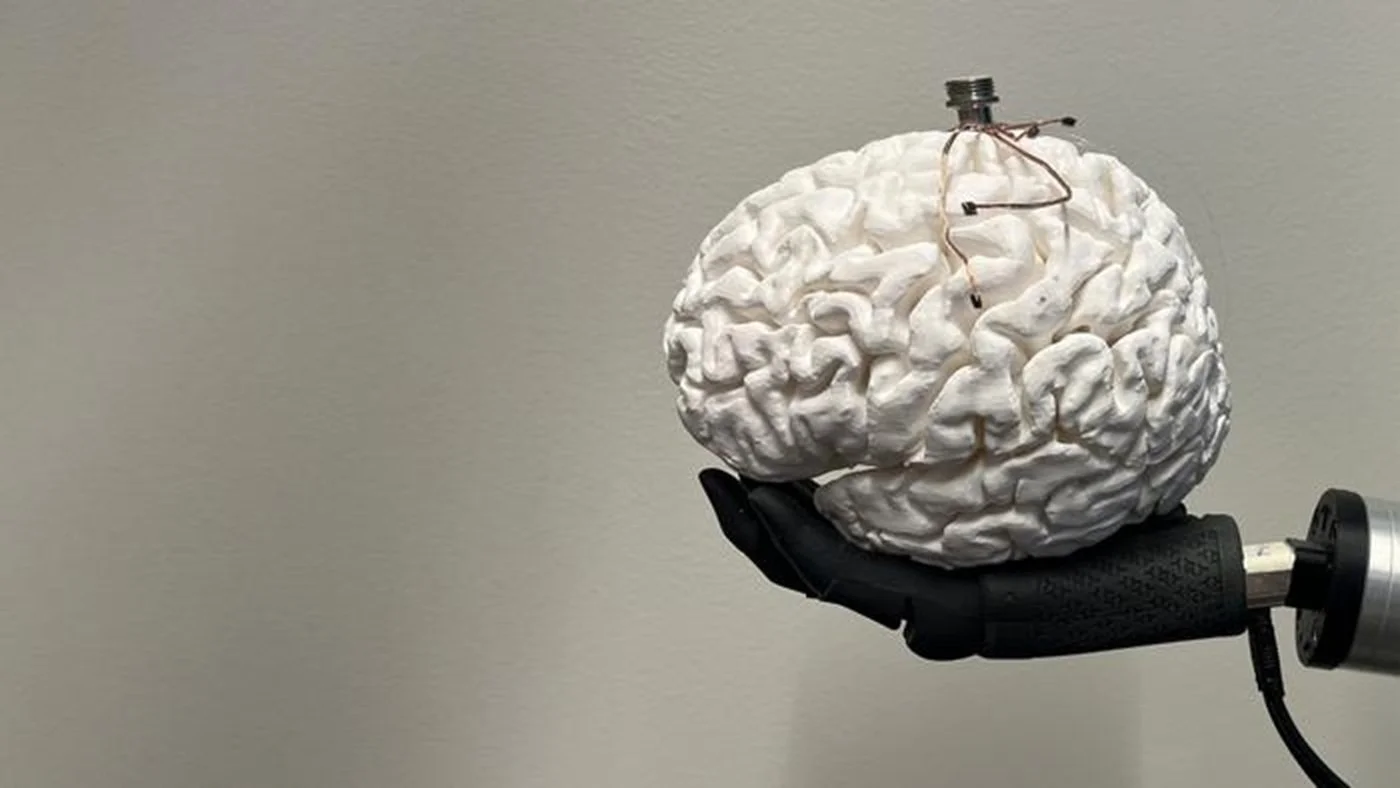
An image of a brain-computer interface, or BCI, shown on a model brain. Similar systems have been developed in parallel over the past 50 years for both touch and vision restoration. - (Image Credit: Chalmers University of Technology | Giacomo Valle)
For more than half a century, researchers trying to restore vision and those working to recreate the sense of touch have largely followed separate paths. They have treated different patients, attended different conferences and focused on different parts of the brain.
Yet the technologies emerging from those two paths have turned out to be remarkably similar.
That overlap could matter for people living with conditions that currently have few or no treatment options, including severe sight loss and paralysis. By recognising vision and touch restoration as versions of the same technical challenge, researchers may be able to share knowledge, solve common problems and move promising treatments towards patients more efficiently.
A review led by Giacomo Valle, Assistant Professor at Chalmers University of Technology in Sweden, has now compared the two fields side by side. Published in Nature Reviews Bioengineering, it suggests that technologies developed independently for artificial vision and artificial touch may be brought together into a more unified approach.
What do vision and touch have in common?
Seeing and touching may feel like completely different experiences, but the body processes them according to some of the same basic principles.
In both cases, information from the outside world must be collected and translated into electrical signals that the brain can understand. The eyes perform this task for vision, while the skin and hands do it for touch.
When illness or injury damages the normal pathways carrying those signals, brain-computer interfaces, or BCIs, may offer another route.
These systems use a microelectrode implanted directly into the brain. The implant communicates with an external device, such as a camera or a bionic hand. Instead of relying on the damaged pathway, the system stimulates a selected area of the brain and attempts to create an experience resembling a natural sensation.
For vision, researchers are developing visual cortical prostheses. For touch, they are working on somatosensory cortical prostheses. The implants are placed in different brain regions, but the underlying technology and many of the scientific challenges are closely related.
“This technology presents a real step forward for patients with otherwise untreatable conditions, in both the fields of sight-loss and loss of motor-function (such as paralysis), giving the ability to control movements, communicate or regain tactile sensation or vision, which previously was not possible”, Valle said.
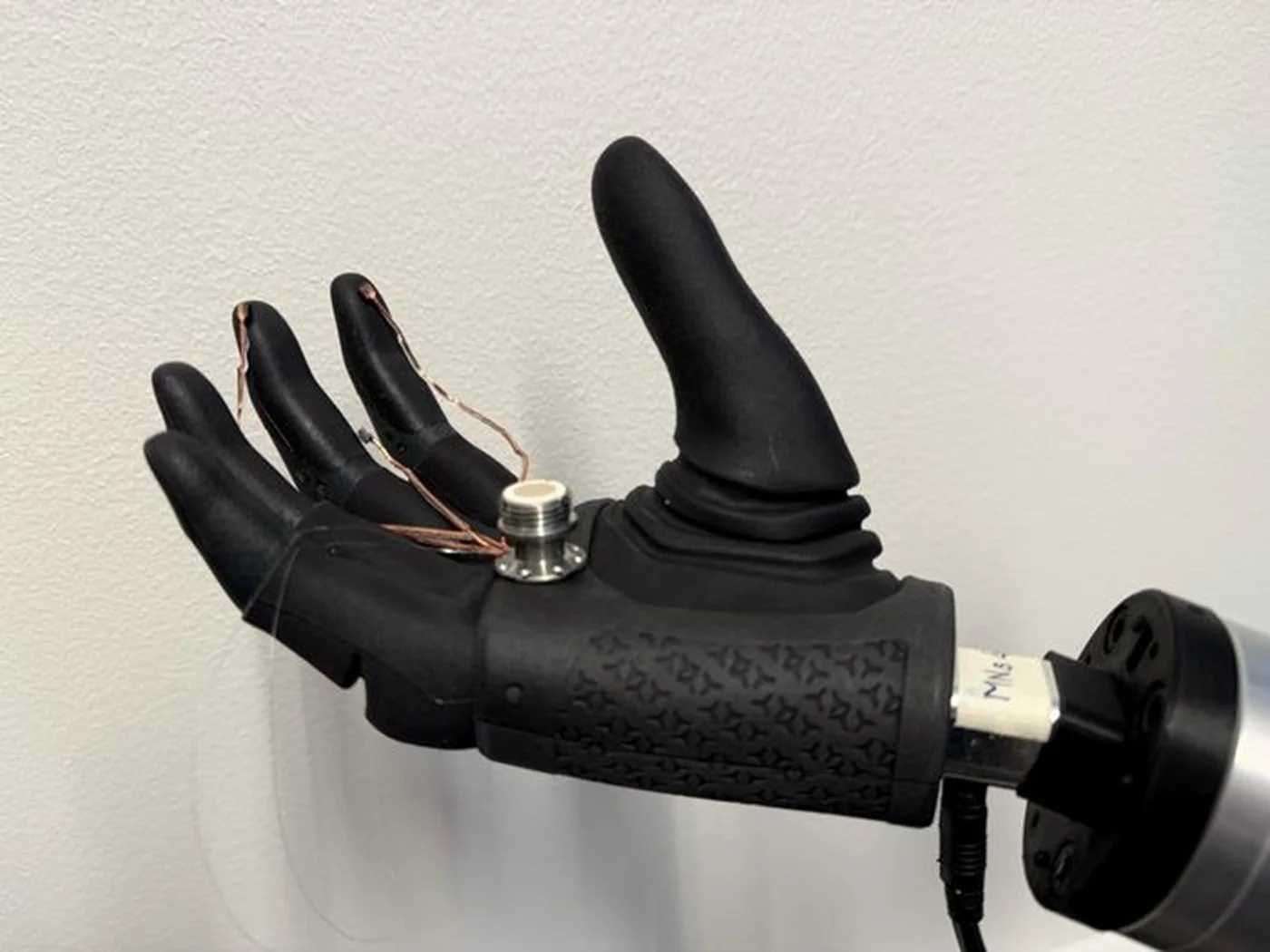
An image of a brain-computer interface, or BCI, mounted on a prosthetic hand, showing one of the technologies developed in parallel over the past 50 years for touch and vision restoration. - (Image Credit: Chalmers University of Technology | Giacomo Valle)
Why did two similar technologies remain separate for so long?
The connection may seem obvious once the two approaches are placed next to each other. In practice, however, artificial vision and artificial touch developed in different research communities.
The scientists involved worked with different patient groups and medical departments. They attended separate conferences and often approached their work through the needs of a particular condition. As a result, similar problems were being studied without a broad conversation between the two fields.
“Normally people work on artificial touch or artificial vision. Researchers go to different conferences and deal with very different conditions and different patients, in different areas of the hospital. There has been parallel development for both senses, but we never talked about this on a global level. Until now, we hadn’t seen this as a common challenge”, Valle said.
The new review, titled Restoring vision and touch with cortical microstimulation, brings the research together in a direct comparison for the first time.
It examines how electrical stimulation of the brain’s cerebral cortex is used, which types of electrodes have been developed and how researchers attempt to create artificial visual and tactile experiences. It also considers results from clinical trials and the technical and clinical obstacles that still need to be addressed.
Looking across both fields may reveal lessons that were harder to see when each was considered alone.



Could combining the fields create more natural sensations?
The connection became particularly clear as researchers began trying to produce experiences more complex than a simple flash of light or a basic feeling of contact.
Valle’s work on artificial touch had moved towards sensations such as edges and movement across the skin. These are more detailed experiences that require the brain to receive and interpret patterns of information.
While investigating those challenges, he found that artificial vision researchers were working on a similar problem. They were also trying to move beyond simple sensations and create more complex, useful forms of perception.
“The idea of merging the two fields of research came from the last paper that I worked on. We were going beyond restoring a simple sense of touch, moving to more complex sensations. We had to consider how to restore the sense of an edge or tactile motion. And through research, I found that the field of artificial vision was looking at the same challenge, aiming for a more complex artificial vision,” Valle said.
This shared challenge may be where collaboration becomes especially valuable. Progress in areas such as electrode design, brain stimulation and the creation of meaningful sensory patterns could potentially benefit both patient groups.
The aim is not simply to place existing devices under a new name. It is to treat sight and touch restoration as related branches of a broader effort to communicate directly with the brain.
Valle hopes this way of thinking will eventually influence how the technology is developed and delivered in hospitals.
“Hopefully our paper opens doors for a beneficial collaboration between the two fields and brings us closer to one technology for both artificial vision and touch that would benefit both patient groups. I have a dream for the future that there is one department in the hospital where a patient can go for ‘sense restoration’ and our unified technology would be easily accessible for all,” he said.
Important technical and clinical barriers remain, and the review does not remove the need for continued testing and development. Its central message is nevertheless clear: researchers trying to restore different senses may have more in common than they previously realised.
By sharing methods, results and solutions, two fields that grew apart could now advance together. For patients, that cooperation may help turn separate experimental technologies into a more practical path towards restoring abilities that were once considered permanently lost.
Sources and further reading:
Restoring vision and touch with cortical microstimulation - (Nature Reviews Bioengineering)
Too busy to follow science news during the week? - Consider subscribing to our (free) newsletter - (Universal-Sci Weekly) - and get the 5 most interesting science articles of the week in your inbox
FEATURED ARTICLES: