
Finding molecules associated with life in space raises a difficult question: did something living make them, or did they form through nonliving processes? The answer matters because discovering life’s chemical ingredients is not the same as discovering life itself.
Researchers at the University of Osaka have developed an electrical method that could help investigate that distinction. Their approach examines amino acids one molecule at a time, looking for a subtle difference that could become a useful clue in the search for extraterrestrial life.
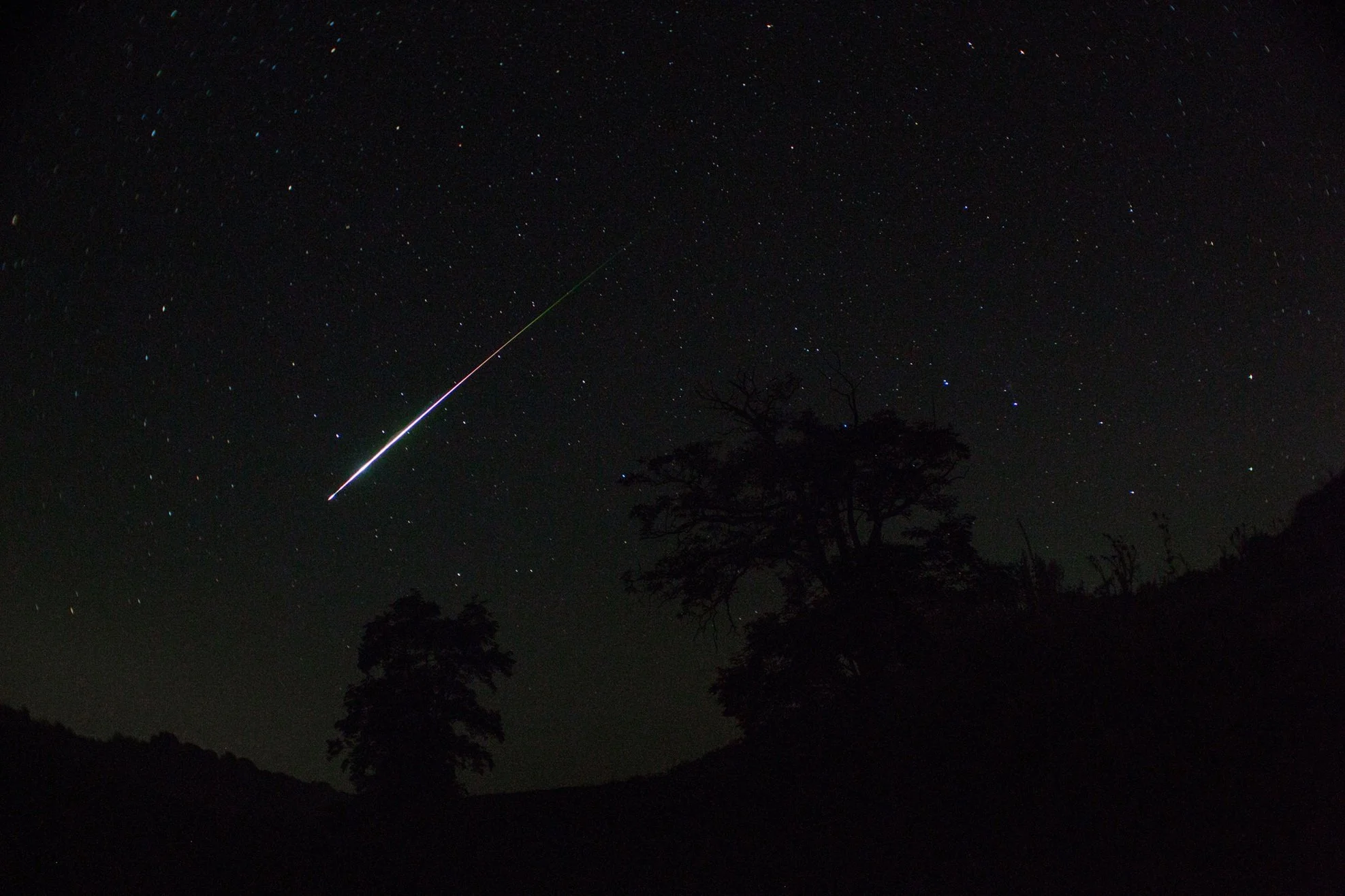
A meteor streaks across the night sky. Researchers have tested a new method for analyzing molecular clues to life using samples from the Murchison meteorite. - (Image Credit: Travel.Life via Shutterstock)
What can a molecule’s mirror image reveal?
Amino acids are the building blocks of proteins. But for researchers searching for signs of life, their importance goes beyond what they help build. Their molecular form also matters.
The release describes two mirror-image forms of amino acids, known as L and D. These forms share the same chemical formula, but their arrangements mirror one another.
According to the researchers, living organisms use amino acids almost exclusively in the L-form, while nonliving chemical and physical processes produce L- and D-forms in equal amounts. That makes the balance between the two a potential biosignature: a measurable feature that could point to life.
The challenge is finding a practical way to measure that balance. Traditional methods examine large groups of molecules. An electrical approach could offer a simpler alternative, with less sensitivity to vibrations and no need for chemical reagents.
To explore that possibility, the Osaka team turned to an exceptionally small gap.
How do you read a molecule with electricity?
The researchers measured molecules as they passed through a gap between two gold nanowires. This generated an electrical signal called a tunneling current.
Crucially, the L- and D-forms produced different patterns in that current. The team combined those patterns with artificial intelligence to distinguish the forms and count individual molecules passing through the gap.
“By combining our nanogap tunneling technique with artificial intelligence, we were able to distinguish between the L- and D-forms of amino acids with over 80% accuracy,” says lead author, Takahito Oshiro.
According to Oshiro, this is the first time researchers have distinguished amino-acid chirality, the difference between these mirror-image forms, at the level of individual molecules.
That result establishes an important capability. But samples relevant to the search for life typically contain many kinds of molecules. Could the method still pick out useful information in a more complicated mixture?
What happened when the team tested a meteorite?
The researchers tested natural samples from the Murchison meteorite in Australia and soil from Chile’s Atacama Desert.
These samples offered a way to investigate whether the technique could identify amino acids among other substances, rather than only distinguish molecules under simpler conditions.
“We analyzed natural samples from the Murchison meteorite in Australia and soil samples from the Atacama Desert in Chile,” explains senior author, Masateru Taniguchi. “Our method was comparable to traditional methods, as both were capable of capturing the major features of amino acid composition.”
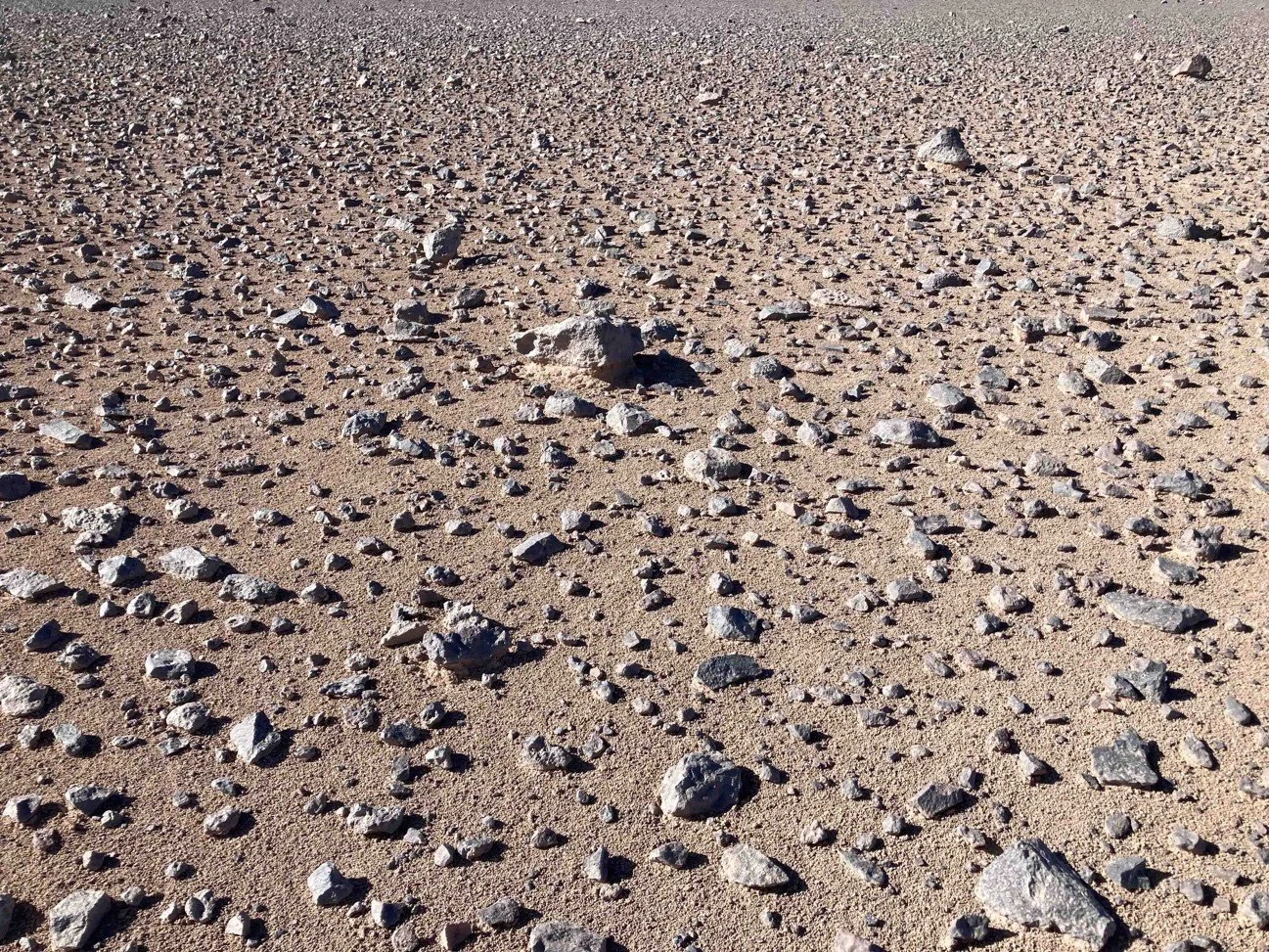
The North of Antofagasta (NOA) site in the extremely dry heart of the Atacama Desert. This Mars-like environment is where the samples analyzed in this study were collected. - Image Credit: Christopher E. Carr via Eurekalert
The comparison suggests that the electrical approach can capture useful information from complex natural samples. It does not amount to a detection of extraterrestrial life.
The team hopes the work, set to be published in Nature Communications, will help make compact electrical instruments for that search possible. The promise lies in moving beyond asking whether amino acids are present to examining the balance of their mirror-image forms. That balance could offer a clue to how they came to be.
If you are interested in more details about the underlying reserach, be sure to check out the article published in the peer reviewed journal nature communications, listed below this artice.
Sources and further reading:

Too busy to follow science news during the week? - Consider subscribing to our (free) newsletter - (Universal-Sci Weekly) - and get the 5 most interesting science articles of the week in your inbox
FEATURED ARTICLES:


Scientists may have found an explanation for one of the biggest mysteries about ʻOumuamua that baffled astronomers in 2017.